
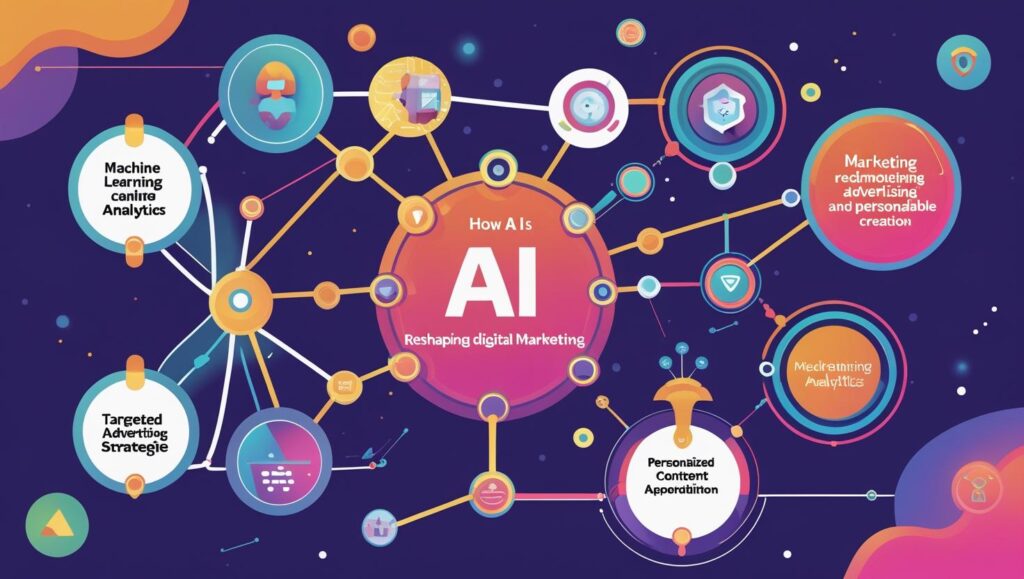
Remember when marketing felt like throwing darts in the dark? You’d create an ad, cross your fingers, and hope it reached the right people. Those days are officially over. Artificial Intelligence has stepped into the marketing world like a superhero with X-ray vision, helping us see exactly what customers want, when they want it, and how they want it delivered. Explore AI in Digital Marketing.
If you’re still doing marketing the old way, you’re essentially bringing a typewriter to a smartphone convention. AI isn’t just changing digital marketing – it’s completely rewriting the rules of the game.
The transformation is happening right now, and it’s more accessible than you might think. You don’t need a computer science degree or a million-dollar budget to harness AI’s power. You just need to understand how AI in Digital Marketing works and where to start.
Why AI is a Game-Changer for Marketers
Think about your last online shopping experience. Did you notice how the website seemed to know exactly what you were looking for? How the ads you saw later were eerily relevant to your interests? That wasn’t magic – that was AI working behind the scenes.
AI processes massive amounts of data in seconds, spots patterns humans would miss, and makes predictions about customer behavior with scary accuracy. It’s like having a crystal ball that actually works, plus a tireless assistant who never needs coffee breaks.
Step-by-Step Guide to AI-Powered Marketing
Step 1: Start with Smart Content Creation
Gone are the days of staring at blank pages, wondering what to write. AI tools can now help you brainstorm ideas, create first drafts, and even suggest improvements to your existing content.
Start by using AI writing assistants to generate blog post outlines, social media captions, or email subject lines. Don’t worry – you’re not replacing your creativity, you’re amplifying it. Think of AI as your brainstorming buddy who never runs out of ideas.
The key is to use AI-generated content as a starting point, then add your unique voice, experience, and personality. Your customers want to connect with humans, not robots, so keep that human touch front and center.
Step 2: Personalize Customer Experiences Like Never Before
Remember when getting a personalized shopping experience meant visiting a small local store where the owner knew your name? AI brings that level of personalization to the digital world, but at massive scale.
Use AI tools to segment your audience based on their behavior, preferences, and past interactions. Then create personalized email campaigns, product recommendations, and website experiences for each group.
For example, if someone frequently buys eco-friendly products, your AI can automatically show them your sustainable product line and send emails about environmental initiatives. It’s like having a personal shopper for every single customer.
Step 3: Optimize Your Ad Spending with Predictive Analytics
Stop throwing money at ads and hoping something sticks. AI can predict which ads will perform best, which audiences are most likely to convert, and how much you should bid for each keyword.
Start by using AI-powered advertising platforms that automatically adjust your bids, test different ad variations, and optimize your campaigns in real-time. These tools learn from every click, conversion, and interaction to make your advertising budget work harder.
The beautiful thing about AI advertising is that it gets smarter over time. The more data it has, the better its predictions become, creating a positive feedback loop that continuously improves your results.
Step 4: Implement Chatbots and Automated Customer Service
Your customers don’t want to wait for business hours to get answers. AI-powered chatbots can handle common questions, guide customers through your website, and even process simple transactions 24/7.
Start with a basic chatbot that can answer frequently asked questions and direct customers to the right resources. As you get more comfortable, you can add more sophisticated features like product recommendations and appointment scheduling.
The goal isn’t to replace human customer service entirely, but to handle routine tasks so your human team can focus on complex problems that require empathy and creativity.
Step 5: Use Predictive Analytics for Strategic Planning
AI doesn’t just help with day-to-day marketing tasks – it can also help you plan for the future. Predictive analytics can forecast customer lifetime value, identify which leads are most likely to convert, and predict seasonal trends.
Use these insights to allocate your marketing budget more effectively, identify new opportunities, and prepare for market changes before your competitors even see them coming.
Step 6: Automate Your Social Media Strategy
Maintaining an active social media presence across multiple platforms can feel overwhelming. AI can help you schedule posts at optimal times, suggest content ideas based on trending topics, and even create simple graphics.
More importantly, AI can analyze your social media performance to identify what type of content resonates with your audience, which posting times generate the most engagement, and which hashtags drive the most visibility.
Step 7: Monitor and Measure Everything
AI excels at turning data into actionable insights. Use AI-powered analytics tools to track customer journeys, identify bottlenecks in your sales funnel, and discover opportunities for improvement.
Set up automated reports that highlight key metrics and alert you to significant changes in performance. This way, you can spot problems early and capitalize on opportunities quickly.
The Human Element Still Matters
Here’s something important to remember: AI is incredibly powerful, but it’s not replacing human marketers – it’s making us superhuman. The most successful AI-powered marketing strategies combine artificial intelligence with human creativity, empathy, and strategic thinking.
AI handles the data crunching, pattern recognition, and repetitive tasks, freeing you up to focus on building relationships, crafting compelling stories, and making strategic decisions that require human judgment.
Your AI-Powered Future Starts Now
The marketing landscape has fundamentally changed, and AI is leading the charge. Businesses that embrace these tools now will have a massive advantage over those who wait. The good news? You don’t need to transform everything overnight.
Start small, experiment with one or two AI tools, and gradually expand your AI toolkit as you see results. The future of marketing is here, and it’s more exciting than we ever imagined. Your customers are waiting for experiences that feel magical – AI is your wand to make that magic happen.
Remember, in the world of AI-powered marketing, you’re not just keeping up with the competition – you’re leaving them in the digital dust.